
Puppy biting and mouthing: what to do instead
Why puppies use their teeth, what to do in the moment, and a simple plan that teaches a gentle mouth without scaring your dog.
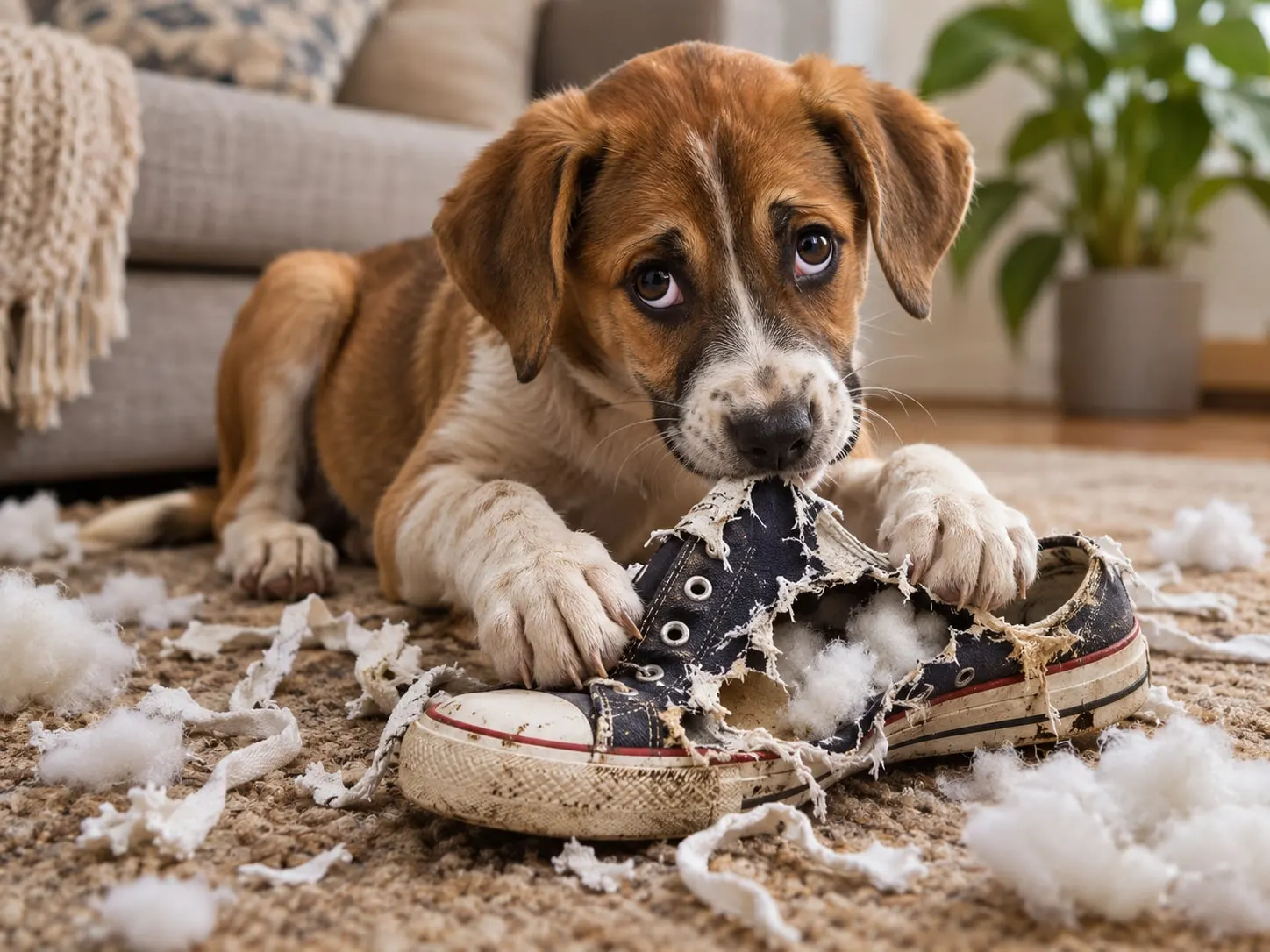
In short
- Mouthing is normal puppy behavior: puppies explore the world with their mouths.
- Swap skin for a toy instead of scolding or pushing your puppy away.
- A short pause in play teaches that teeth on skin ends the fun.
- Overtired puppies bite more, so build in rest and quiet time.
If your puppy uses your hands as chew toys, you are in good company. Puppies learn about the world with their mouths, and playing with people is no different from playing with littermates. The goal is not a puppy that never uses their mouth. It is a dog who learns that gentle is the only way play continues.
What to do in the moment
Stay calm and still
Big reactions are exciting. Keep your voice low, say a calm "oops" and stop moving your hands.
Swap for something legal
Offer a chew or tug toy. When your puppy takes it, praise them. Keep toys within reach so you can swap instead of argue.
Pause the play
If the teeth keep coming, stand up, turn away or step behind a gate for 10 to 20 seconds. Then come back and restart. The message is simple: teeth on skin means the game stops.
Reward the gentle moments
When your puppy licks, nuzzles or plays with a soft mouth, tell them so with praise or a small reward. Dogs repeat what pays.
Habits that make it worse
- Rough hand games, slapping or wrestling with your fingers.
- Yanking your hand away quickly, which triggers a chase.
- Shouting, holding the mouth shut or tapping the nose, which can frighten a puppy and teach them hands are unpredictable.
- Letting play build until your puppy is overexcited and overtired.
Questions
When will the biting stop?
Most puppies mouth less as they mature, and consistent redirection helps it fade sooner. If it feels intense or is not improving, a qualified trainer can watch your puppy and tailor a plan.
Is it okay to yelp like a littermate?
A quick, calm "oops" works for many puppies. For some, a loud yelp is exciting and makes things worse, so if it does, switch to the quiet pause instead.
General training and routine information from the Dogify team. It does not assess your dog or give advice about your dog's condition, and it is not a substitute for a qualified professional.
Related guides
Positive reinforcement explained: why reward-based training works
What reward-based training is, why timing matters and what a professional society for animal behavior says about the methods you choose.

Potty training a puppy: a simple schedule that works
When to go out, how to reward the right spot and what to do after accidents, in a routine you can follow from day one.
Seven training mistakes that slow your dog down
The most common reasons progress stalls, and the small changes that get a puppy or adult dog learning again.