
Potty training a puppy: a simple schedule that works
When to go out, how to reward the right spot and what to do after accidents, in a routine you can follow from day one.
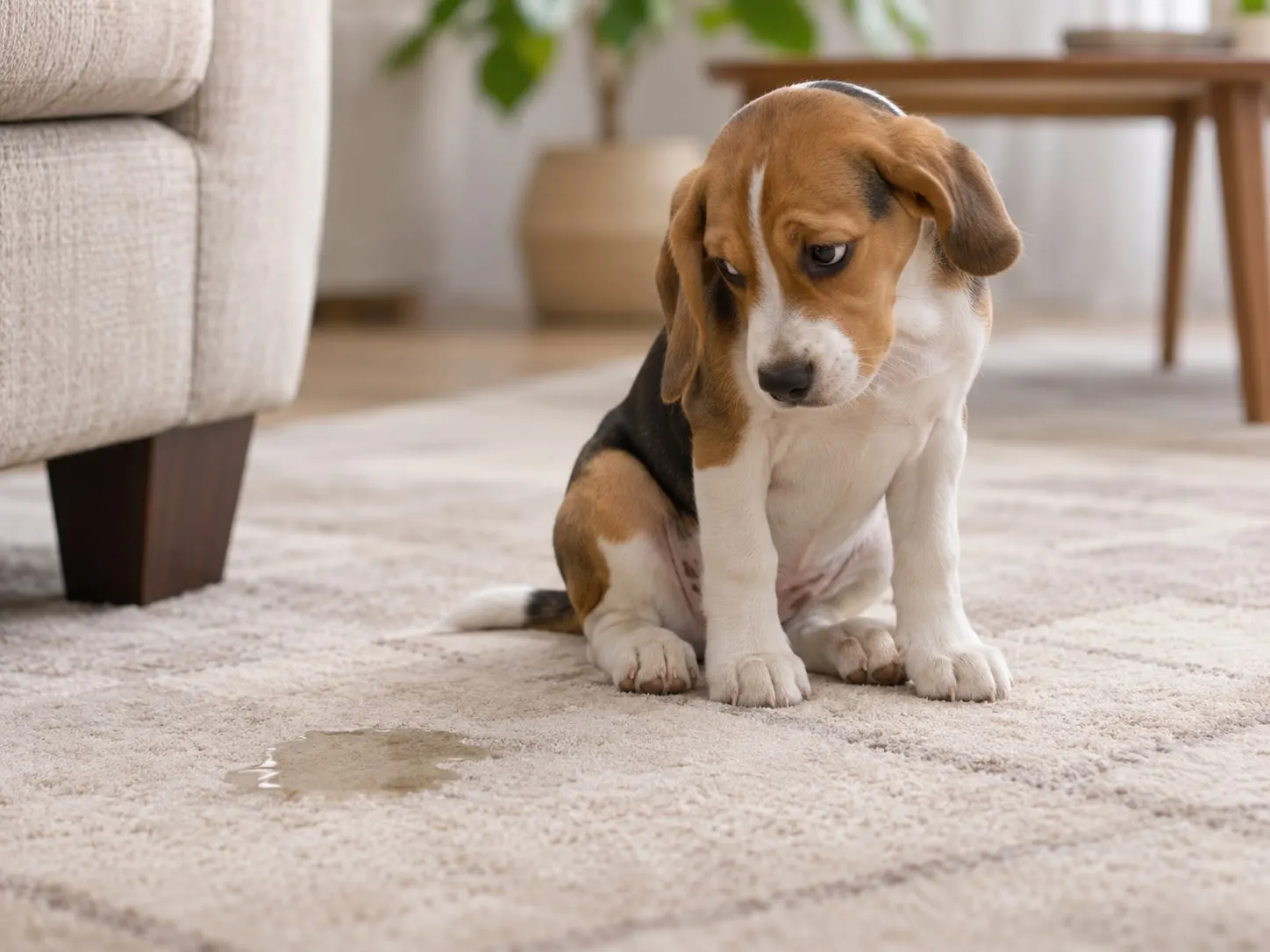
In short
- Take your puppy out after waking, eating, drinking, playing and before bed.
- Go to the same spot and reward the moment they finish.
- Supervise or confine your puppy indoors so mistakes are rare.
- Never punish accidents: clean up and try again.
House training is mostly about management and timing. Puppies cannot hold on for long, and they do not understand the rules until you show them over and over. A clear schedule and a reward for the right spot teach faster than any amount of scolding.
Your daily routine
Go out at the key moments
First thing in the morning, after every nap, after meals and drinks, after play, and right before bed. In the early weeks that adds up to a lot of trips, which is normal.
Use the same spot
Walk your puppy to one area on a leash and wait quietly for a minute or two. Smells in a familiar spot encourage them to go.
Reward the instant they finish
Praise and give a small food reward right as they finish, before they walk away. Timing is everything. You can add a cue such as "go potty" once the habit is forming.
Watch indoors
Keep your puppy where you can see them, on a tether, or in a pen or crate when you cannot. Sniffing in circles, whining and heading for a corner are signs to move.
Clean accidents calmly
Say nothing, clean the spot with an enzyme cleaner so the smell does not invite a repeat, and take it as a sign to go out sooner next time.
Questions
Should I use pee pads?
Pads can help if you have no easy outdoor access, for example in an apartment. For most families, one clear message (outside) is simpler. If you use pads, shrink them over time and move them toward the door.
What about nights?
Expect to take your puppy out during the night in the early weeks. Keep it quiet and boring: out, reward, back to bed. Your puppy will sleep for longer stretches as they grow.
General training and routine information from the Dogify team. It does not assess your dog or give advice about your dog's condition, and it is not a substitute for a qualified professional.
Related guides
Puppy biting and mouthing: what to do instead
Why puppies use their teeth, what to do in the moment, and a simple plan that teaches a gentle mouth without scaring your dog.
Positive reinforcement explained: why reward-based training works
What reward-based training is, why timing matters and what a professional society for animal behavior says about the methods you choose.
Seven training mistakes that slow your dog down
The most common reasons progress stalls, and the small changes that get a puppy or adult dog learning again.