
Sit, down and stay: the three foundation cues
How to teach the first three cues with a food lure, then make them reliable with the three Ds: duration, distance and distraction.
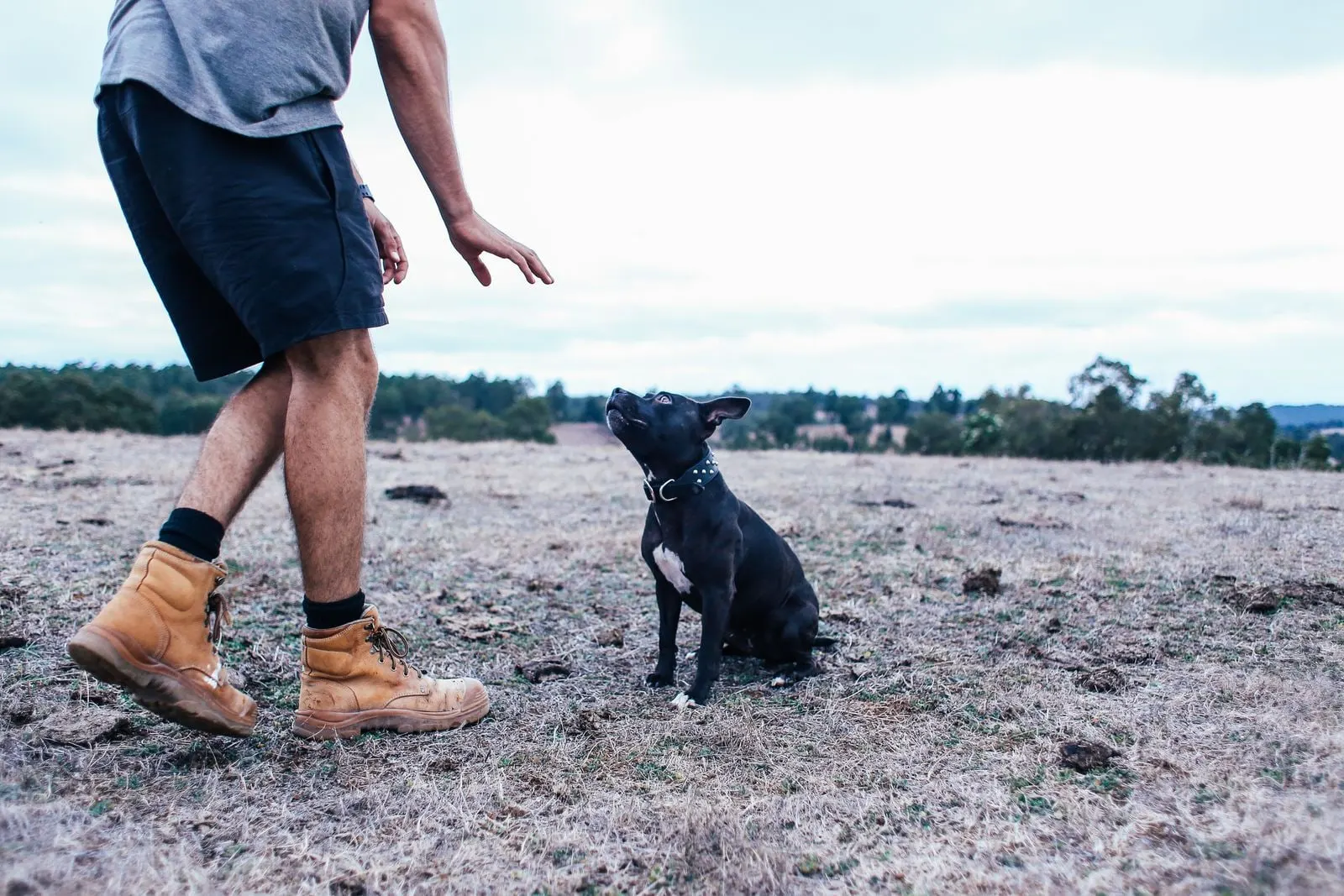
Photo: Rachel Claire · Pexels License · Pexels
In short
- Lure the position, then add the word once your dog does it reliably.
- Build stay in order: duration first, then distance, then distraction.
- Release your dog with a word, so they know when they are done.
- Five short sessions a day beat one long one.
Sit, down and stay are the foundation for almost everything else: greeting guests, waiting at doors and settling in cafes. They are also easy to teach in a few short sessions, as long as you break them into small steps.
Sit
Lure the position
Hold a small food reward at your dog's nose, then slowly lift it over their head. As their nose goes up, their bottom goes down.
Mark and reward
The instant their bottom touches the floor, say "Yes!" and reward. Repeat a few times.
Add the word
When your dog sits easily, say "sit" just before you lure. Over time, fade the lure and keep the reward.
Down
Start from a sit
With your dog sitting, hold a reward at their nose and slowly lower it straight down to the floor between their paws.
Slide it out
As their elbows drop, slide the reward forward along the floor. When they are fully down, mark and reward.
Add the word
As with sit, once it is reliable, say "down" just before the lure.
Stay: the three Ds
- Duration. Ask for a sit, count one second, mark and reward. Then two, three, five, always rewarding while your dog is still holding the position.
- Distance. Once duration is solid, take one step back, return and reward. Add distance a step at a time.
- Distraction. Only then add distractions, such as a toy on the floor or a family member moving. Make each change small.
Questions
How many times a day should we practice?
Several very short sessions of one to three minutes work better than one long one. End while your dog is still keen.
My dog gets up before I release. What now?
Make the step easier: shorter time or less distance. Reward before they get up, and make your release word the only thing that ends the stay.
General training and routine information from the Dogify team. It does not assess your dog or give advice about your dog's condition, and it is not a substitute for a qualified professional.
Related guides
How to teach your puppy to come when called
A five-step recall plan that turns your dog's name into the best sound in the world, from the living room to the park.
Teach your dog to settle on a mat
A calm default behavior you can use at the cafe, at meals and when guests arrive: how to teach "go to your mat" in short sessions.
Seven training mistakes that slow your dog down
The most common reasons progress stalls, and the small changes that get a puppy or adult dog learning again.