
How to teach "leave it"
Teach your dog to ignore what is on the floor, on the sidewalk or on your plate, in five stages that build real self-control.
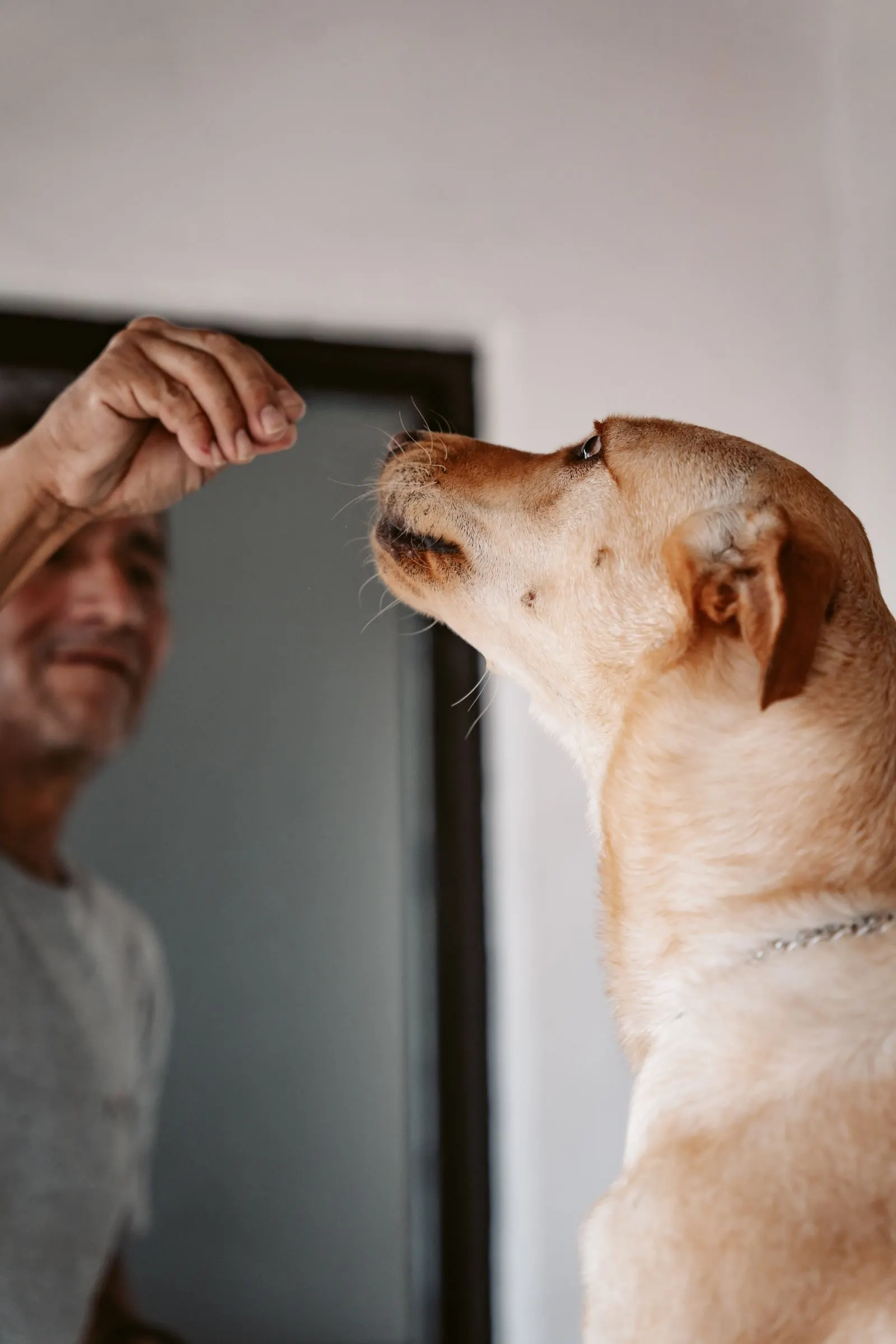
Photo · Pexels License · Pexels
In short
- "Leave it" means "ignore that and look at me", and the reward comes from you.
- Start with a closed hand and something boring, then build up to exciting things.
- Make it easier whenever your dog gets it wrong twice in a row.
- Practice before you need it, not in the middle of an emergency.
Dogs explore the world with their noses and mouths, which is lovely until the thing on the ground is a dropped sandwich or a plastic wrapper. "Leave it" gives you a polite way to say "not that", and the best part is that it is built on rewards, not on grabbing or scolding.
Teach it in five stages
Start with a closed hand
Hold a low-value reward in your closed fist. Let your dog sniff, lick and paw at it, and wait. The moment they pull away or glance at you, say "Yes!" and reward from your other hand.
Add the cue
When your dog backs off from your fist every time, say "leave it" just before you present it. Keep rewarding from the other hand, so "leave it" always pays better than the thing itself.
Move it to the floor
Put a boring item on the floor and cover it with your hand or foot if your dog goes for it. When they look away, say "Yes!" and reward them with something better.
Make it harder
Uncover the item, then drop it from a few inches, then from higher, then toss it a little way. Always reward from your hand or pouch, and never let your dog have the item they were asked to leave in the early stages.
Use it on walks
Practice outdoors with boring things first, then more tempting ones. Give a great reward each time your dog turns away, so "leave it" stays worth doing.
Questions
What if my dog snatches the item?
Go back a step. Cover the item, keep the rewards flowing and make the exercise easier before moving on. Snatching means the step was too hard, not that your dog is stubborn.
How often should we practice?
A few short sessions of one or two minutes each day. Because the skill matters most when your dog is excited, practice in a range of places.
General training and routine information from the Dogify team. It does not assess your dog or give advice about your dog's condition, and it is not a substitute for a qualified professional.
Related guides
How to teach your puppy to come when called
A five-step recall plan that turns your dog's name into the best sound in the world, from the living room to the park.
Loose-leash walking in five steps
Why dogs pull, and a five-step method that teaches yours to walk beside you without tugging.
Sit, down and stay: the three foundation cues
How to teach the first three cues with a food lure, then make them reliable with the three Ds: duration, distance and distraction.